

 Showrooms
 Contact
 My Account
 Track Your Order


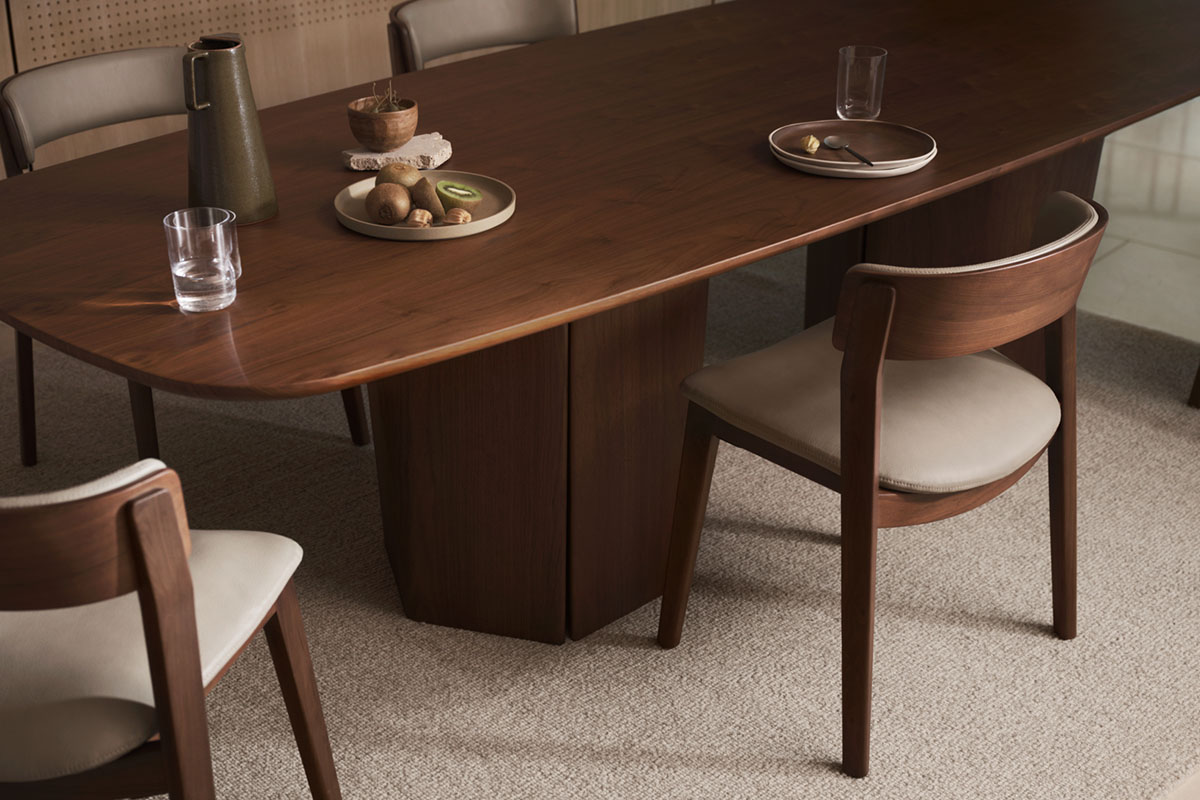

Whether you have a formal dining room, an open-plan kitchen, or a compact dining area, your table is often the focal point of your space and where you gather with family and friends.
As one of the most integral pieces of furniture in your home, you want your dining table to suit your style while bringing comfort, functionality and balance to the space.
Given the variety of shapes, sizes, and materials, choosing the right dining table for your space can be challenging. In this article, we will discuss some of the most important factors to consider when purchasing your dining table:

What to consider before buying your dining table
Before selecting your dining table, understanding your specific needs will guide you toward the right design for your home.
Define the function of your dining space
Your dining table serves multiple purposes beyond meals. Consider how you will use the space daily. Will it double as a workspace for remote work or homework sessions? Do you host regular dinner parties that require flexible seating? Understanding the primary function helps determine the ideal table configuration.
Assess your room layout
The architecture of your space influences table selection. Open-plan dining areas benefit from round or oval tables that create visual flow between zones, while dedicated dining rooms can accommodate larger, extendable designs.
Consider natural light, traffic patterns, and how the table relates to surrounding furniture.
Determine your aesthetic direction
Your dining table should harmonise with your interior style. King Living dining tables are available in a variety of materials and finishes from timber and ceramic to marble. Contemporary spaces often favour clean lines and minimal ornamentation, while traditional homes may suit more detailed craftsmanship.
The material, finish, and silhouette all contribute to visual balance and symmetry within your space.
Plan for scale and proportion
A well-proportioned table creates harmony rather than overwhelming or underwhelming your space. Consider both the physical dimensions and visual weight of the table in relation to your room size and ceiling height.
You can view all dining table dimensions online, or visit your nearest showroom to experience them in person.

Your dining table size guide
Understanding dimensions
Selecting the correct table dimensions ensures both comfort and functionality. You will find King Living dining table for four, six, eight, and ten guests, with extendable designs available.
Allow a minimum of 600mm per person for comfortable dining space. This measurement helps you calculate what size table suits your seating needs.
For reference, a table seating six comfortably measures approximately 1500 to 2400mm in length.
Table height and seating capacity
The standard dining table height ranges from 710 to 810mm, designed to pair comfortably with dining chairs. This height ensures adequate legroom while maintaining proper ergonomics for dining. Consider this measurement when selecting coordinating seating.
Extendable dining tables for flexibility
For those who entertain occasionally but require a compact dining area for daily use, an extendable dining table offers versatility. These designs expand to accommodate additional guests, then retract to preserve space and maintain visual balance in your room.

Selecting the right table shape for your space
Is it better to have a round or rectangular dining table? This is one of the most common questions people ask when looking for a dining table.
King Living dining tables are available in a rectangle, square, round or oval shapes. While aesthetically, you may gravitate towards certain designs, the size and layout of your dining space will likely dictate the appropriate table shape for your home.
Rectangle
Rectangle tables remain the most versatile option for most spaces. The linear form creates visual symmetry with architectural elements and accommodates larger gatherings efficiently. Rectangle designs suit both narrow and expansive dining areas, making them ideal for varied entertaining needs.
The longer shape allows flexible seating arrangements and works seamlessly in open-plan dining areas where the table anchors the space without disrupting flow.
Round
Round tables suit compact dining areas and create intimate settings for family meals. The curved silhouette softens angular spaces and eliminates the formal hierarchy of a table head.
Ideal for conversational flow, round tables bring guests closer together naturally. They typically accommodate four to six people comfortably and work beautifully in square rooms where they echo the space proportions.
Square
Square tables create visual cohesion in square rooms and offer intimate dining experiences, perfect for families of four or hosting close friends. The symmetrical form positions all guests at equal distance, fostering connection and conversation.
Oval
Combining the benefits of rectangle and round designs, oval tables offer flowing curves with extended seating capacity. They soften spaces while maintaining the practical advantages of larger dining surfaces.

Create harmony with the right chairs
Chair clearance and circulation
Correct spacing transforms a dining area into a functional entertaining space. Leave a minimum of 900mm between your table edge and walls or other furniture. This clearance allows comfortable chair movement and guest circulation.
When pulled out, dining chairs require approximately 600 to 750mm of space. Factor this into your planning to ensure guests can easily access their seats without disruption.
Optimising legroom and comfort
Allow 200 to 300mm from the chair seat to the table underside for comfortable legroom. This clearance prevents guests from feeling cramped and accommodates various body types and seating positions.
Creating conversational flow
Position chairs approximately 150mm apart to provide adequate elbow room while encouraging conversation. This spacing creates intimacy without crowding, essential for both family meals and entertaining.

Selecting the best material for your dining table
Selecting the right dining table material involves considering durability, maintenance, style and lifestyle factors. Let’s explore the options.
Wood
Timber brings natural warmth and tactile beauty to your dining space. The grain variation and organic texture create visual interest while connecting your interior to natural elements. Available in Onyx, Smoked Oak, American Walnut and Natural Oak, you can choose a signature finish that resonates with your style.
While timber is a durable material that’s easy to wipe clean, we recommend using placemats, coasters, or a tablecloth during meals to help prevent scratching the wood.
Ceramic
Ceramic offers exceptional durability with minimal maintenance requirements. The material resists scratching and staining, making it particularly suitable for family-friendly dining or frequent entertaining. Available in Malabar, Fog, and Storm, a ceramic surface provides a refined aesthetic with effortless care benefits.
Marble
Marble introduces timeless elegance and an element of luxury suited to both contemporary and traditional interiors. While resistant to everyday use, acidic spills can cause etching on a marble tabletop. This can lead to a higher level of maintenance required compared to timber or ceramic.

Finding the perfect dining table for your lifestyle
Entertainers
Those who regularly host gatherings benefit from larger table dimensions or extendable designs that accommodate fluctuating guest counts. Consider durable materials like ceramic that withstand frequent use while maintaining their refined appearance. Rectangle shapes maximize seating capacity for dinner parties.
We recommend: The Heritage Extendable Dining Table and the Aspen Dining Table.
Families
Family-friendly dining tables prioritize durability alongside style. Ceramic and sealed timber surfaces resist daily wear from homework sessions, craft projects, and meals. Round shapes eliminate sharp corners in busy households while bringing everyone together comfortably.
We recommend: The Quay Ceramic Dining Table and the Issho Round Dining Table.
Couples and small households
Compact dining areas in apartments or smaller homes call for round, oval or square tables that maximize space efficiency. These shapes create intimacy for daily meals while the right material choice ensures the table remains a beautiful focal point without overwhelming the room.
We recommend: The Magnolia Dining Table, Quay Square Dining Table, and the Heritage Round Dining Table.
Open-plan living
In open-plan spaces, your dining table serves as a visual anchor that defines zones while maintaining flow. Select designs that complement your kitchen and living areas, creating cohesion through material choices and scale. Rectangle and oval tables often suit these layouts, providing structure without barriers.
We recommend: The Issho Oval Dining Table, Aspen Dining Table, and the Heritage Dining Table.
Key takeaways:
1. Measure carefully: Allow 900mm clearance around your table and 600mm of dining space per person
2. Consider your lifestyle: Match your table to how you use the space, whether for daily family meals or regular entertaining
3. Choose the right shape: Rectangle suits most spaces, round creates intimacy, oval creates a balance of surface space and flow
4. Prioritise quality materials: Ceramic, timber, and treated marble offer durability and timeless appeal
5. Plan for proportion: Select table dimensions that balance your room size without overwhelming or underwhelming the space
6. Factor in flexibility: Extendable tables adapt to changing needs while maintaining visual balance when contracted
Updated March 2026
