


 Showrooms
 Contact
 My Account
 Track Your Order


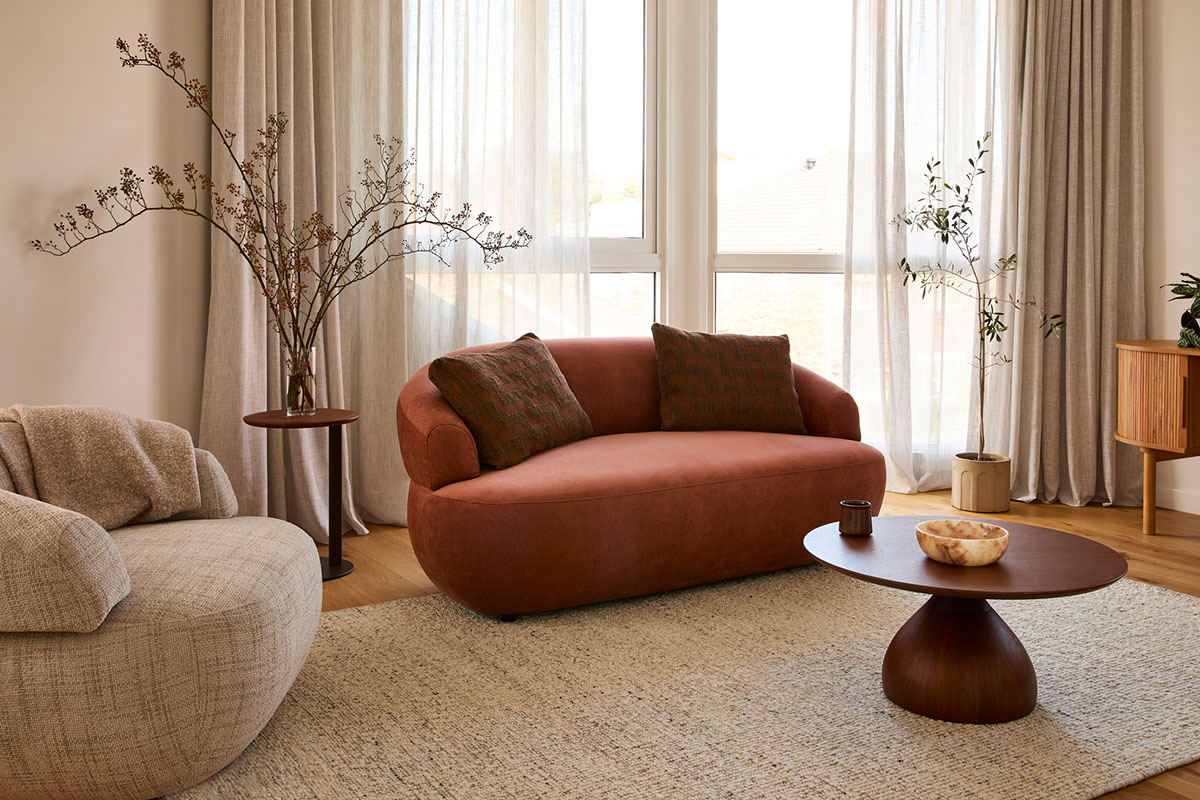

Designing and styling your living room is a study in balance. From the function of your furniture to the aesthetic you want to curate, every decision shapes how you experience your home day to day,
With expert insight from the King Living team, Alinta Lim, Senior Designer, and Sebastian Nash, Head of Textiles, this guide uncovers how to style a modern living space in ten simple steps.
Explore living room style ideas:

Step one
Start with a floor plan
The best place to start is with a measuring tape and a notepad. A living room floor plan is a visual representation of a home’s interior and the starting point for creating a functional space with natural flow. By understanding the dimensions and key fixtures like doors, windows and power point locations, you can plan your furniture placement and avoid expensive mistakes.
When you visit a King Living showroom, bring your floor plan so both you and the design consultants have a clear picture of what you are looking to achieve. If drawing up a floor plan is not for you, try a digital floor plan generator. There are various free options available online, including AI-powered tools.

Tip: Avoid the dollhouse effect
The dollhouse effect occurs when furniture is too small for a room, leaving the space feeling sparse and unanchored. The fix, counterintuitively, is to scale up: a well-proportioned design will make a room feel more expansive, not less.
"A frequent mistake is thinking you need to scale down the size of your furniture. In reality, choosing a larger design can help a room feel more balanced and intentional,” shares Senior Designer Alinta Lim.
“Modular sofas adapt to the way you live, whether in a compact apartment or a larger home. A sofa like Jasper is a perfect example of a design that can adapt to any space. Start with a smaller configuration, then rearrange or expand over time.”

Step two
Define your lifestyle requirements
Every living space is different, and the best furniture arrangement is the one that suits how you actually use the room.
If the room is primarily for TV viewing, two sofas facing each other may look considered but won't serve your lifestyle. Instead, consider incorporating versatile designs like the Aura Swivel Lounge Chair, which offer the flexibility to face the screen, the view, or turn to face the sofa for conversation.
If you want to know how to arrange living room furniture in a compact room, explore five small apartment layouts to make every square metre count.
Tip: Create zones for different purposes
A well-designed living space creates distinct zones that serve their own purpose. One zone may be a cosy reading nook, another a defined entertainment area for hosting, each defined by layout, furniture placement and considered accessories.
“A rug or layered rug is one of the most effective ways to define different areas or in open-plan interiors, your living room, kitchen and dining space. It creates contrast and subtly establishes a new zone without interrupting the flow,” says Sebastian Nash, Head of Textiles.
For more tips on living room rug placement, read a designer’s guide to layout and size here.

Tip: Four simple ways to integrate your TV into your room design
With a bit of creativity it’s possible to have a TV without it becoming the focal point in the room.
- Create a wall of art behind your TV to decrease the focus
- Frame with open shelving
- Position on a modern console and conceal behind closed doors of a cabinet when not in use
- Choose a monochrome colour palette to help your TV blend into the surrounds

Step three
Express your own style
Style is personal and the designs you choose influence your day to day.
Creating a mood board helps define the aesthetic you are drawn to and collect living room décor inspiration. Exploring apps like Pinterest or compiling images from interior design magazines will help determine the style you respond to most.
If you are drawn to clean lines and natural textures, explore warm modernism or Japandi for modern living room style ideas. If you lean towards layered interiors with depth and colour, consider maximalism or eclectic curation.
Select colours that are meaningful to you and already part of your life and personal style. You can choose one or two colours and go warmer or softer within that tonal colour range to create your palette.
Tip: If in doubt, select a neutral colour palette
“A neutral room does not have to feel uninspiring. Deeper tones such as navy and charcoal can also act as neutrals. The key is to layer and use mixed materials to create depth,” says Sebastian.

Step four
Build from the floor up
Whether you opt for carpet or hardwood, a rug can visually anchor your room and bring a sense of comfort.
Three ways to perfectly place a rug:
- Fill the room by covering the vast majority of the floor space. This works best in smaller rooms that don’t already have carpet. Find a designer’s guide to rug placement here.
- Design a seating zone by visually grouping your furniture together. At least two legs of your sofa and chair should be on the rug, imagining your furniture pieces coming together to join the conversation.
- Create dimension by styling your living room with layered rugs, placing one rug on top of an existing carpet or a smaller rug on a larger one.
“The simplest approach is to go for contrasting colours. If you have a darker sofa, choose a lighter rug,” Sebastian adds. “A design like the Melrose Rug with a refined ribbed texture brings year-round comfort and a more intimate appeal."

Step five
Walls and windows
-
Window treatments are one of the many ways to bring layers into your space and have the added benefit of providing privacy, warmth and controlling the natural light flow.
Window treatments can be layered in countless ways. Try pairing a soft linen drape with a textured curtain or a bamboo shade with a patterned curtain.
-
Painting your walls will transform the look of the room, making it appear more spacious.
Create a sense of serenity with a calming single colour, or make a bold statement with a bright colour or patterned wallpaper. To create a vibrant colour drenched interior, choose similar shades for your wall, sofa and décor.
-
Hanging artwork, photographs or mirrors is an opportunity to add character to the room.
In terms of colour, the main two options are to go for colours that are already in the room to create cohesion or play with a bold contrast to the neutral shade of your furniture.

Step six
Choose your anchor piece
An anchor piece is a furniture item or built-in feature of a room, such as a window or fireplace, that you select as the focal point.
Modular sofa designs like 1977 Sofa make ideal anchor pieces. Individual modules can be moved to create different configurations, helping to future proof your space when preferences change or your family grows.
“With the 1977 Sofa, you can even build a custom design to fit your space perfectly,” Alinta adds. “Many modular sofas from King Living feature a chaise that can be swapped from left to right for flexibility. Look for designs with built-in under-seat storage to reduce clutter.”

Tip: Opt for sustainable, long-lasting designs
Adopting a buy well, buy once mindset is beneficial for anchor pieces. While not everyone can invest in sustainable furniture, designs built to last hold their value rather than end up in landfill. Alinta shares,
“As our world evolves, our sustainability practices will transform. King Living will continue to keep moving towards our vision of being a global leader in sustainable furniture design.”
This commitment to longevity is reflected in modular designs that adapt as you move from one home to the next, a 25-year steel frame warranty and removable covers that allow you to reconfigure, repair and refresh your sofa over time instead of replacing it.